
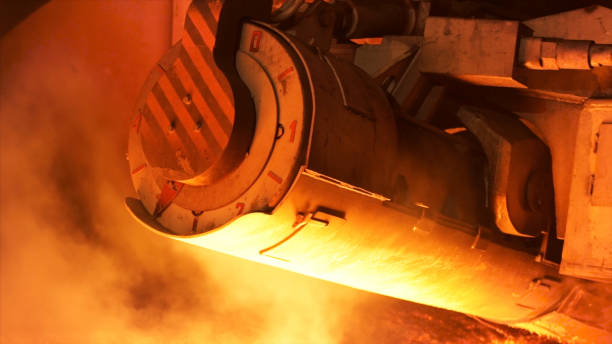
Zinc die casting solution is one of the most unique practices in the modern manufacturing industries because it provides improved efficiency and incredible precision and enables the construction of complex parts. It uses molten zinc alloys to fill high-accuracy moulds to produce parts with complex geometries and accurate dimensions. Because of this versatility, it has become essential in various fields, from automobiles to electronics, to manufacture components that have to qualify for high standards of quality and performance.
This article offers a detailed description of zinc die casting, including how it is done, why it is done, where it is used, the properties of the material used, and a new trend in zinc die casting. Whether a businessman or a layman who wants to know more about its implications, this extensive piece identifies why zinc die casting remains relevant in contemporary industrial production.
Die casting techniques originated in the early 1800s using lead and tin alloys for small modules used in the printing and textiles industries. With the increasing demand for materials with high strength, zinc alloys as construction materials were also favored for their strength, durability, and low melting point. Zinc die casting emerged as popular Hutchens in the early twentieth automobile and consumer goods industry due to intricate designs and mechanical performance. During the 1900s, improvement was felt with the high-pressure injection technique, which lent a hand in efficiency and accuracy. Subsequent advancements such as computer-aided designing, automation and 3D printing have added to the process, making zinc Die casting a cutting-edge technology in today’s manufacturing industry.
The Zinc Die Casting Process: Step-by-Step Overview
This process of zinc die casting has various steps to complete, which ensures excellent reliability, accuracy, and sturdiness. Every operation is integral in generating high-quality parts that meet industrial requirements in component manufacturing.
Mold Design and Tooling
The zinc die-casting process starts with the creation of the tools, known as molds or dies. These moulds are normally made of hardened steel and are designed to operate under high pressure and temperature for several cycles. Some of the intricate designs are produced using efficient computer-aided design to design the molds used in production.
Another advantage of high/precision engineering within mold design is that post-processing is done to a minimum since surfaces and dimensions of the molded product are acceptable. Since the molds determine the form and finish of the zinc die casting products, industries offer their best in this aspect. Mold design goes beyond specifying reliability and performance; it is also critical in achieving cost-effective production via quantity production with low failure rates.
Melting and Injection
Sound alloys of zinc are remelted at comparatively low temperatures, thus reducing energy use and prolonging the use of molds. When in the molten state, it is forced under high pressure through the mold of the cavity, which ensures that there is minimal shrinkage and reproduces fine, detailed work.
This high-pressure injection process is characteristic of zinc die casting, which enables the production of components with a close tolerance. Pressure, speed of injection, and temperature are reduced to automated controls, and one can expect the same outputs each time they are produced. Furthermore, the process reduces the porosity to a large extent, providing improved strength and mechanical characteristics to the zinc die castings.
Cooling and Ejection
Upon attaining zinc solidification, the mold is further cooled to enhance mechanical properties. One of the many benefits of such a rapid cooling process is adding productivity and reducing common defects, including shrinkage and warping. If needed, the part is finished, cooled, and ejected from the mold, and then it is further processed.
Processes such as polishing, plating and powder coating increase the surface quality and reduce the life cycle cost of the components. Radiography examination and CMM are employed to detect failures of internal flaws and to control the dimensional control of the zinc die-casting parts to ensure high quality is achieved.
Advantages of Zinc Die Casting in Modern Manufacturing
Zinc die casting has several advantages that people in different industries consider when selecting the best process. Due to the speed and high accuracy with which it manufactures complex components, it is critical in current manufacturing systems.
High Precision and Design Attributes
Zinc die casting is useful to manufacturers since it allows them to produce complex geometric shapes with close tolerances. Contrary to conventional turning techniques, this method is precise, involves low scrap levels, and requires minimal post-process operations. Therefore, it is suitable for industries like aerospace and electronics, among others.
Durability and Strength
Zinc alloys have good mechanical characteristics, impact strength and wear properties. These characteristics make zinc die-casting parts suitable for handling mechanical loads and working in extreme conditions, making them very durable.
Cost-Effectiveness
Since zinc has a low melting point, energy consumption during production is low. Further, due to zinc alloys’ high recyclability and low material wastage, the process is sustainable and cost-effective. Most manufacturers can produce a large number of identical components within a short period with little or no differences, which also reduces costs.
Superior Surface Finish
It is a well-known fact that in the case of zinc die-casting products, the surface finish is smooth to the sight. Low post-processing levels mean lower labour costs and virtually seamless parts perfect for aesthetic and applied applications.
Corrosion Resistance
Zinc alloys contain an inherent corrosion protection feature, which increases product durability, especially when used outdoors or in a marine environment. These characteristics make zinc die casting most suitable for use in applications where durability in performance is required most.
Applications of Zinc Die Casting Across Industries
Aerospace Industry
Automotive die casting is critical in the aerospace industry because it is used to manufacture lightweight, high-strength, and precision zinc die-cast parts. An ideal application area is any industry where weight and strength reduction or weight and structure are essential, and integrated zinc die casting is a perfect example. Products, including brackets, housings, control panels, and sensor enclosures, are most frequently produced using this process. Zinc alloys meet high dimensional stability; thus, the parts can withstand the vibrations, temperature changes, and mechanical forces involved in flight.
Corrosion is also feared to cause environmental degradation of these components; however, the corrosion resistance of zinc helps in their longevity. Moreover, the surface finish derived from zinc die casting appears smooth. It is less likely to require further machining or finishing, making the practice substantially economical for the aerospace industry. Today, with the help of automation and integration of 3D printing, zinc die casting is still fulfilling the needs of advanced aerospace engineering.
Telecommunications Industry
The electronics manufacturing industry, especially telecommunications, uses zinc die casting to manufacture accurate parts such as antennae holders, connectors and cable clips. The industry in question relies much on components that have to be light yet very robust and, at the same time, demonstrate the desired degree of electromagnetic shielding. These are the advantages of zinc die casting, making getting some parts of tight tolerance and a good finish possible. In the same way, its exceptionally high thermal conductivity makes the metal very suitable for heat sinks and other related applications, which are essential for the efficient operation and durability of communication equipment.
Zinc die casting also embraces miniaturization to enable the manufacturing of small, intricate parts necessary for contemporary telecommunication structures such as 5G networks and satellite telecommunication. It also has superior corrosion resistance, which improves parts’ longevity, mainly when they are installed outside the building and exposed to differing weather conditions.
Medical Equipment and Devices
The medical industry cannot overemphasize precision and hygiene; zinc die casting is ideal for producing medical equipment parts. Surgical instruments, diagnostic tools, and imaging equipment housings are a few examples where zinc die-cast products are used simply because the technology offers high dimensional accuracy, smooth surface finish and biocompatibility. Manufacturing includes complex shapes while being lightweight, making medical devices functional and comfortable for the patient.
Also, repeated sterilization and the ability to withstand the formation of a localized corrosion product or anodic oxide, which is expected in service, make zinc a material of higher reliability in long-term applications where sterility would also be crucial. With advancements in medical electronics, zinc die casting is ideal for rapid tooling and low-cost volume manufacturing of new devices through precise quality control. Its versatility allows producers to produce unique designs to suit specified medical uses during the increasing call for custom-built parts in the medical field.
Renewable Energy Systems
It has also donated a lot to the renewable energy industry by supplying sturdy and lightweight parts to photovoltaic devices, wind generators and energy storage systems. Zinc die casting is applied in solar energy in frames, brackets, and connectors for use in the exterior walls and rooftops exposed to severe weather conditions. This makes it suitable for use in areas that are exposed to moisture, heat, and ultraviolet light. Likewise, wind turbines use zinc die casting through parts like gear housings and mechanical couplings since these particular gears need toughness, endurance, and accuracy. Zinc alloys also make it possible to create lightweight parts that ultimately enhance energy efficiency within energy storage systems, including batteries and inverters, while lowering material expenses. This is a perfect synergy with the increasing thrust toward making new energy solutions sustainable since zinc is 100% recyclable.
Construction and Architectural Hardware
The construction industry, particularly the sector dealing in architectural hardware, keenly relies on zinc die casting in that it produces door handles, hinges, locks, and other decorative items. In architectural applications including residential and commercial facilities, zinc die casting has benefits. It can quickly produce intricate designs with smooth, simplified surface finishes. In addition, the mechanical strength it offers for these components and the material’s ability to resist corrosion also make these parts capable of withstanding heavy usage of the product and any surrounding environmental factors.
It is also used in the formation of designs of zinc die-casting machines because it helps architects and builders meet particular style and performance demands. Applying to everything from beautiful embellishments to main load-bearing components, zinc die casting offers some applications to increase the strength and aesthetic appeal of building hardware.
Furniture and Fixtures
The furnishing industry uses zinc die casting to create functional and fashionable products like door handles, hinges, knobs, pullers and moldings. The process enables the crafting of thin and complex designs on the furniture and gives a polished look to the furniture surface. Thanks to Zinc’s durability, these fixtures are built to be resilient so that they remain as beautiful as they were when installed, even when used often. Also, by applying some surface treatments, including electroplating and powder coating, the designers have various opportunities. Thus, for modern and antique styles similarly, zinc die casting solves the question of creating nice-looking fixtures that are both aesthetic and practical. That is why it can also be used for making large quantities of goods and offer manufacturers the possibility of making good products without overcharging them.
Defence and Military Pennsylvania and Texas Chamber of Commerce
Zinc die casting is an essential technology for the defence industry because the industry requires various parts to perform optimally and display durability. Examples are weaponries, communication system parts, and armour-plated automobile parts, where accuracy becomes necessary. The use of zinc die casting helps facilitate the manufacture of lightweight parts with high strength that can withstand conditions such as shocks, vibrations, and temperature fluctuations. The corrosion resistance of zinc alloys is also a factor that preserves these parts in aggressive climates, as is expected of high-field performance. Superiorities in zinc die casting enable us to meet the defence industries demand for complex shapes, high precision, and shorter first cycle time.
Lighting Fixtures
These include the production of fixtures, housings, and mounting brackets for the lighting industry, where zinc die casting is widely applied. Due to its high surface finish compatibility and pliability of shape, attractive products that can easily fit in any interior/exterior environment can be designed. Since zinc is corrosion-protected, outdoor lighting fixtures are suitable for use in cases of moisture or changes in weather. In addition, it has acceptable thermal conductivity when applied to LED light heat sinks to enhance energy savings and performance. Using these characteristics, Zinc Die Casting is among the most preferable materials for making lights.
Sports Resource and Equipment
Zinc die casting plays an important role in developing some of the components required for several products, including bicycles, sports equipment, and outdoor tools. Because Zinc is durable, the parts can withstand handling and environmental impacts, which makes the product suitable for recreational use. Other tool manufacturers also find that zinc die casting provides accuracy and hardness and use this to advantage in products such as wrenches, clamps or handles that must last longer. The opportunity to create ergonomic products increases the 線ultural usability of a product, and corrosion reinforces the product’s reliability over a long period.
Toys and Hobby Models
Zinc die casting is commonly used to manufacture toys and hobby models since the technique provides delicate detail and a smooth surface. Gadgets such as toy cars, comic figures, and mechanical novelties gain much from zinc’s power to capture intricate features impressive to the eye. Another advantage of zinc die casting is that its strength makes these products non-breakable, hence safe for use and longevity. Even if it comes to the finished product’s appeal, manufacturers can add one or multiple layers of coating and finishing, making zinc die casting suitable for creating beautiful and high-quality leisure items.
Future Trends in Zinc Die Casting Technology
Today’s Zinc Die Casting Industry has reflected significant steps to use new technology and better practices.
Automation and Robotics
Employers have continued to use robotic control of production lines to improve production. Robots increase accuracy, decrease manpower expenses, and guarantee client satisfaction through standardization, especially when the extras are many.
Best practices to achieve sustainability in manufacturing
As for evident trends, manufacturers are paying more attention to processes such as energy efficiency and used materials that must be recyclable. Given this, Zinc is a very reusable material in production and is convenient for environmental conservation worldwide.
3D Printing Integration
Rapid tooling is another application of AM, where materials like 3D printing are used to create molds and prototypes. The integration simplifies lead time issues and speeds up the product development process to facilitate quicker market penetration.
Advanced Coating Techniques
New developments in the coatings segment are enhancing both anti-corrosive and aesthetical features. These technologies add long life to products and provide new uses where ornaments and usefulness are required.
Conclusion
The use of zinc dies has become a revolution in the manufacturing industry, as they enhance accuracy and strength and are significantly cheaper. Although zinc’s primary products include automotive components and consumer electronics, its uses extend to virtually all industries, satisfying the increasing global need for high-quality, high-performance components.
The complex designs the process can generate in a single operation, the quality of the surface finishes, and the relatively low levels of scrap and waste make the process important in today’s integrated manufacturing systems. While the industry is widely transforming through embracing technology and focusing on sustainability, zinc die casting proves to be a leading solution to clients’ economic and environmental needs.